Skip To Content

Electric Infrared Ovens

Custom Electric Infrared Heating Systems

Engineered Electric Infrared Oven Solutions

Blasdel designs and manufactures custom, infrared ovens for thermoforming, powder coating, paint curing, adhesive drying, preheating molds, moisture dry-off and other curing and drying applications.

We build custom ovens for the automotive, medical, furniture, agriculture, power and appliance industries to name a few.

The oven you buy will be designed for your part, process, space and utility ratings. We make sure that the oven you receive meets your every specification. Our ovens are used in a variety of applications and industries around the globe.

electric-infrared-img

Electric Infrared Ovens Technical Advantages

  • High Energy Efficiency – Radiant heat reduces wasted energy
  • Zoned Temperature Control – Independent heater zones for process optimization
  • Compact Design – Reduced footprint compared to convection ovens
  • Scalable Configurations – Suitable for batch or inline conveyor systems

Standard Design Features

  • Custom-sized electric infrared emitters matched to application thermal loads
  • Multi-zone PID temperature control – Through temperature controllers or PLC. UL 508A control panel.
  • Integrated exhaust safety interlocks per NFPA.
  • PLC integration

Electric Infrared Ovens vs Convection Ovens

Electric infrared ovens are 4 times faster than convection ovens at heating the part, the footprint is much smaller, the warmup time is 5-7 minutes compared to 30+ minutes for convection and with little airflow, parts are not exposed to the potential contamination blowing in convection ovens.

Adding convection to an infrared oven only causes problems.  The convection added by blowing air on the heaters decreases the energy efficiency of the heaters by cooling them and adds contaminates into the parts themselves

Configurations

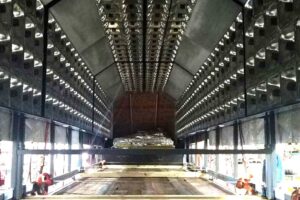
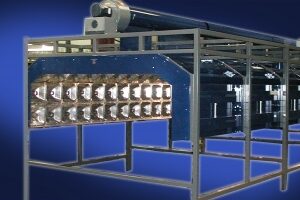
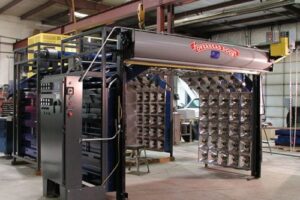
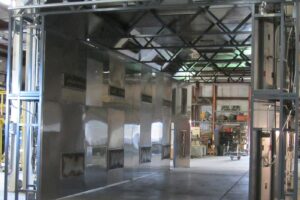
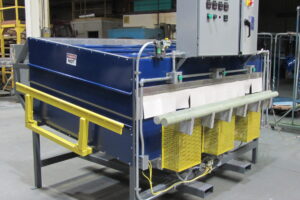
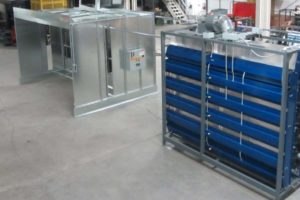
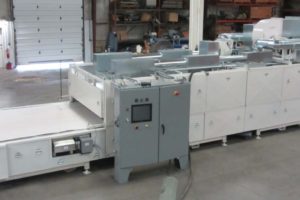
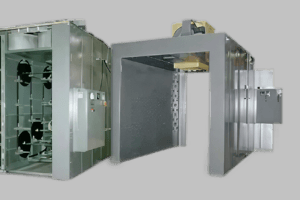
Because of our modular heaters, we can design the oven to comply with the shape of your complex parts for excellent heat coverage.  And with our multiple types of emitters and the ability to build both electric infrared or gas catalytic ovens, we make sure the technology is correct for you.  We have multiple test ovens to help determine the best technology and orientation for your project.

picture 1 img

Heavy-Duty Construction & Proven Engineering

All ovens are constructed using robust steel framing designed for long-term structural integrity. Steel components are welded for strength and premium fasteners are used throughout to withstand continuous industrial operation and thermal cycling. Infrared heaters are precisely positioned at optimal distances and orientation from the product to achieve consistent, uniform heat coverage across the entire part. Each heater circuit is properly wired, tested, and safeguarded, with integrated guarding and safety features designed to meet industrial standards.

Heater Life, Efficiency & Process Control

Most infrared emitters are rated for 10,000 to 20,000 operating hours, providing long service life and reduced maintenance. Heater wattage is carefully specified so systems typically operate at 70–80% of full power, rather than running at maximum output. Operating below peak capacity reduces thermal stress on the heaters, improves energy efficiency, and ensures the system is correctly sized for the process—resulting in more stable temperatures, longer component life, and consistent production results.

Built for Long-Term Performance and Reliability

Our custom infrared and industrial ovens are engineered and built to perform reliably for decades. Every system begins with a detailed evaluation of the customer’s actual parts and process requirements. Whenever possible, we test customer materials prior to design and fabrication to validate heating performance, temperature uniformity, and process outcomes before the oven is built. This disciplined, process-first approach ensures optimal results and has helped us build a loyal base of long-term, repeat customers.

Quality Assurance

Quality assurance is built into every stage of our process. Over decades of experience, Blasdel Enterprises has carefully vetted and qualified a trusted network of suppliers to ensure our infrared heaters are manufactured to meet the exact size, output, and performance requirements of each customer’s application.
All control panels are designed and built to meet UL 508A, NFPA 86, and CAN/CSA C22.2 No. 14-2013 standards.
Each heater and heating zone is individually inspected and tested after assembly to verify proper operation and system performance.
Customers are invited for product testing during the build or prior to shipment to review their oven, ask questions, and gain a clear understanding of operation and maintenance. Once final inspections are complete, the oven is professionally crated and shipped to the customer’s facility.

Replacement Parts & Legacy Oven Support

We regularly receive calls from customers operating ovens that were built decades ago—many prior to the year 2000—and often those calls are for their first-ever replacement parts. Our equipment is designed to last, and we continue to support it long after installation.
Blasdel can also supply replacement parts for ovens manufactured by companies that are no longer in business, including Dri-Quik (CCI Thermal), Industrial Oven Company, and Ceramic Oven Company.
If your oven carries the Dial-O-Temp label, it was originally manufactured by Blasdel Enterprises, and we maintain parts support for those systems as well.
Electric Infrared Ovens Specifications

ParameterSpecification Range
Emitter Operating Temperature
Ambient to 1700°F (application dependent). Actual part temperatures vary based on substrate properties, coating properties, process, environment, geometry, and line speed.
Heating MethodElectric infrared emitters – medium-wave, controllable into long-wave infrared ranges; V-heaters 2-6 microns medium to short wave
Control ZonesSingle-zone or multi-zone configurations
Temperature ControlPID temperature control using PLC or PID temperature controllers; UL 508A and CAN/CSA C22.2, No. 14-2013 listed control panels
Power Requirements
Configured to match available facility electrical service
Oven Configuration
Stand alone or conveyed
Operation mode
Parts are conveyed through the oven
Emitter Arrangement
Top, bottom, side, or combination layouts - Vertical, horizontal, casegoods, round
Safety Features
Exhaust Over-temperature and airflow interlocks per NFPA requirements; Emitter high and low limit settings
Optional Features
Recipe creation and management, HMI touchscreen interface, remote controls, automated material handling
Types
Ceramic generator, Coil-O-Rod, quartz fabric faced panels, V-heaters

Case Study

Blasdel Enterprises Infrared Powder Coating Oven reduces high oven maintenance costs for brake shoe and brake pad manufacturing company. Read More

LOOKING FOR A NEW CHALLENGE

We are always excited to face new challenges, to meet new people and to help them to solve the complex problems they encounter with their every day quality and production needs.  Join us to learn all the ways we may help you to meet those challenges and to solve those problems.
Take a minute to email sales@blasdel.net
 or call us at 800 661 3213 to find out what our current customers already know!  To purchase ceramic generators, Coil-O-Rod emitters and reflectors online, go to Order Spare Parts For all other parts, contact us at orders@blasdel.net

Challenge us with your application in our testing/production facilities!

Contact us to schedule a test in our Blasdel Testing Lab today.

Industrial Infrared Oven FAQs

How fast do infrared ovens heat compared to convection ovens?

Medium wave infrared 3-6 minutes

Convection 20-30 minutes depending on the oven size and the volume of air within the oven.

The typical rule of thumb comparing infrared to convection is that infrared processes four times faster than convection. Therefore, a convection oven would have to be four times longer than an infrared oven. Adding convection to an infrared oven only causes problems. The convection decreases the energy efficiency of the heaters and adds contaminates into the parts themselves. Convection is 20-40% energy efficient while medium wave infrared is 60-85% energy efficient and adds 15-40% convection energy to the process.

Can infrared ovens be zoned for precise temperature control?

Yes. Industrial infrared ovens can be zoned with independently controlled heater banks to match part geometry, line speed, and process requirements. Zoned control allows operators to fine-tune thermal profiles for uniform heating and consistent results across complex or variable products. When running different part sizes, zones can be turned down or off when running smaller parts compared to larger parts.  In hard to cure spots, zoning can help with independent setting in that area.

What materials work best with infrared heating?

Infrared heating is highly effective for materials such as metals, coated metals, powders, paints, plastics, composites, wood products, and adhesives. Testing parts and the process is the best procedure to determine the optimal type of infrared emitter and the oven configuration.

Are electric infrared ovens more energy efficient than gas ovens?

Yes. Medium wave infrared is 90-100% energy efficient, while convection is 20-40% energy efficient. Electric infrared ovens deliver the highest energy transfer efficiency, converting 95–98% of input power directly into usable heat, with 70–80% radiant infrared energy absorbed by the coating or substrate. Gas catalytic and convection ovens rely primarily on heated air, resulting in significant energy losses, with only 20–50% and ~25% of input energy effectively transferred to the product. This makes electric infrared systems faster, more efficient, and better suited for precision thermal processing.

Can infrared ovens integrate into existing conveyor lines?

Yes. Infrared ovens are commonly designed to integrate with existing conveyor systems, including belt, chain, and overhead conveyors. Custom mechanical layouts and control interfaces allow seamless integration without disrupting upstream or downstream equipment.

Can infrared ovens be used for more than paint and powder curing?

Absolutely. Infrared ovens are used for drying, preheating, moisture removal, adhesive activation, thermoforming, and specialty heating processes across many industries. Their flexibility makes them suitable for high-volume production, R&D, batch or pilot-line applications.

Do infrared ovens require special controls or safety systems?

Industrial ovens use control panels built to NEC guidelines. Blasdel designs, engineers, and builds all control panels in accordance with NEC and NFPA guidelines and ensures they are rated UL508A and CAN/CSA C22.2 No. 14-2013. UL inspects our panels on a regular basis to confirm compliance with these specifications. Blasdel control panels include integrated safety interlocks, temperature monitoring, and emergency shutdown features and can be tailored to customers’ needs, including your facility’s safety requirements.

<< 1 >>